


"No Borders #15" (2026, in transit) by Tatiana Escallón
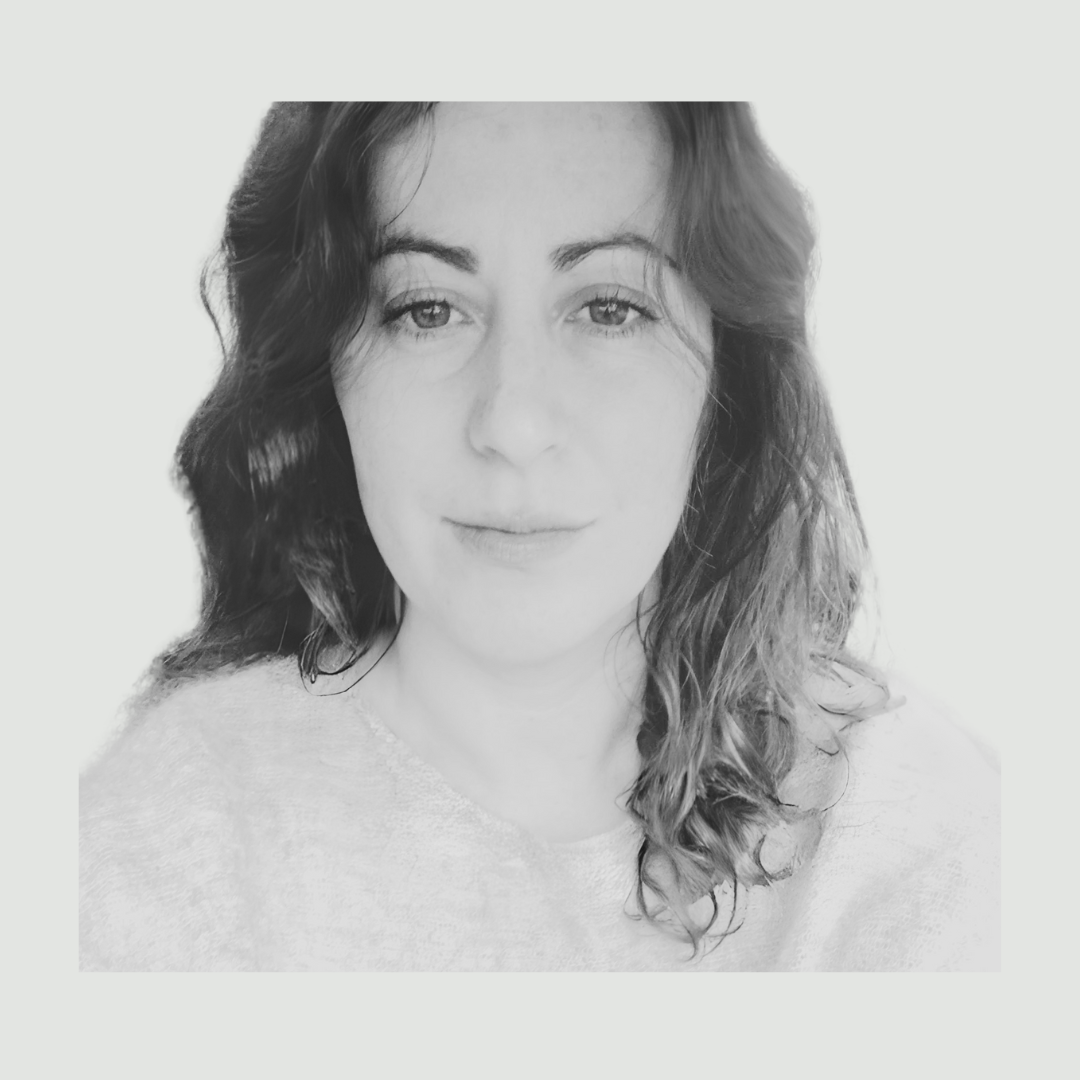
Tatiana Escallón is a Colombian artist who immigrated to the United States as an adult and keeps her studio in Houston. Trained as a graphic designer, she has worked in animation and illustration, published children's books and written poetry before turning fully to painting, installation and sculpture. Her current series, No Borders, is painted entirely in transit, on airplanes, trains, ferries and metros. She tells us about the creation of this work.

"No Borders is the result of many years of work. I started with displacement and immigration, which are a big part of my life: how we bring things from our place of origin to the new place we live in. For a long time I developed that through the use of line. About two years ago, this body of work began, and its concept keeps shifting a little with time. Today what I explore is the limitation of time and space in contemporary life, and what the sociologist Marc Augé calls the non-place.
Non-places are generic, anonymous spaces, like an airplane on its way somewhere. You see that space exactly as I do, and when we are in it we are anonymous. So when I am there, I give meaning to that space and to that moment. All the paintings in this series are created in transit, in airplanes, trains, buses, taxis, metros, ferries. This one is very large, 42 by 68 inches, and that is part of the point: I cannot control the space. It is complicated to paint like that, and things happen. The work is not made only by me. The infrastructure takes part in the creation. The person next to me goes to the bathroom, the flight attendant comes with the food, the metro stops or accelerates, and I have to adapt. And when the ride is over, I stop. There is no moment of satisfaction like in the studio, where you step back, come closer, leave it and return the next day to see what it needs.
I don't travel in order to paint. I let it happen inside my life. I had to come to Colombia to visit my family, so I prepared a canvas. This one has a route: Houston, New York, New York, Houston. Before the trip, especially before a flight, I have to be very organised. I choose the size and the preparation of the canvas, and for this piece I painted a half orange background in the studio. I pack the canvas folded in my bag, and I choose my colours in advance, imagining what will happen, because there is no switching here. It is what it is. Then, once I am in transit, it becomes a complete chaos. That is why you can see little squares in the painting: the folds leave lines and graphic elements as I unfold the canvas little by little. It reminds me a bit of the Surrealists' game of the Exquisite Corpse, where each person draws a part of a folded sheet without seeing the rest.
I use acrylic, and sometimes the paint spreads where I did not expect. I cannot move, I have to wait until it dries, and I have to solve it. For me it is a reference to how life is. On planes people usually fall asleep or put on their earphones, and I put on mine. Sometimes a neighbour asks what I am doing, and I give them my Instagram. Once, in the New York metro, a lady told me the smell was too strong, so I stopped painting.
Small written words appear in the paintings, like an archive: the flight number, the altitude, the metro line, the street, the ferry. I have always loved calligraphy and writing, and for years my paintings included words from my poems. Here, the writing records what is happening.
Each painting is a surprise. Nothing is repeated, because it is really the present. For years I wanted to make a work that belongs to today, that could not have been made fifty years ago, and that is not about the past. The title says it: No Borders means no frontiers, no limits, no place. I started when I realised that working in a different place changed my work. Before, a painting was from a residency, or from Colombia. These ones are made nowhere. About five of them were made only in the air, so they were not even made on planet Earth. I have made around eighteen so far, and I cannot rush them. They depend on my travels, and my travels depend on my life, on visiting my son and my family. It also makes me think about immigrants. We usually imagine them going to one place, but in the end it creates a lot of movement, between the place of origin and elsewhere, another kind of displacement."
Tatiana Escallón, October 2026


Comments