.png)
"Parrot Apartment 3" (2023–2024, Houston, Texas) by Joseph Havel
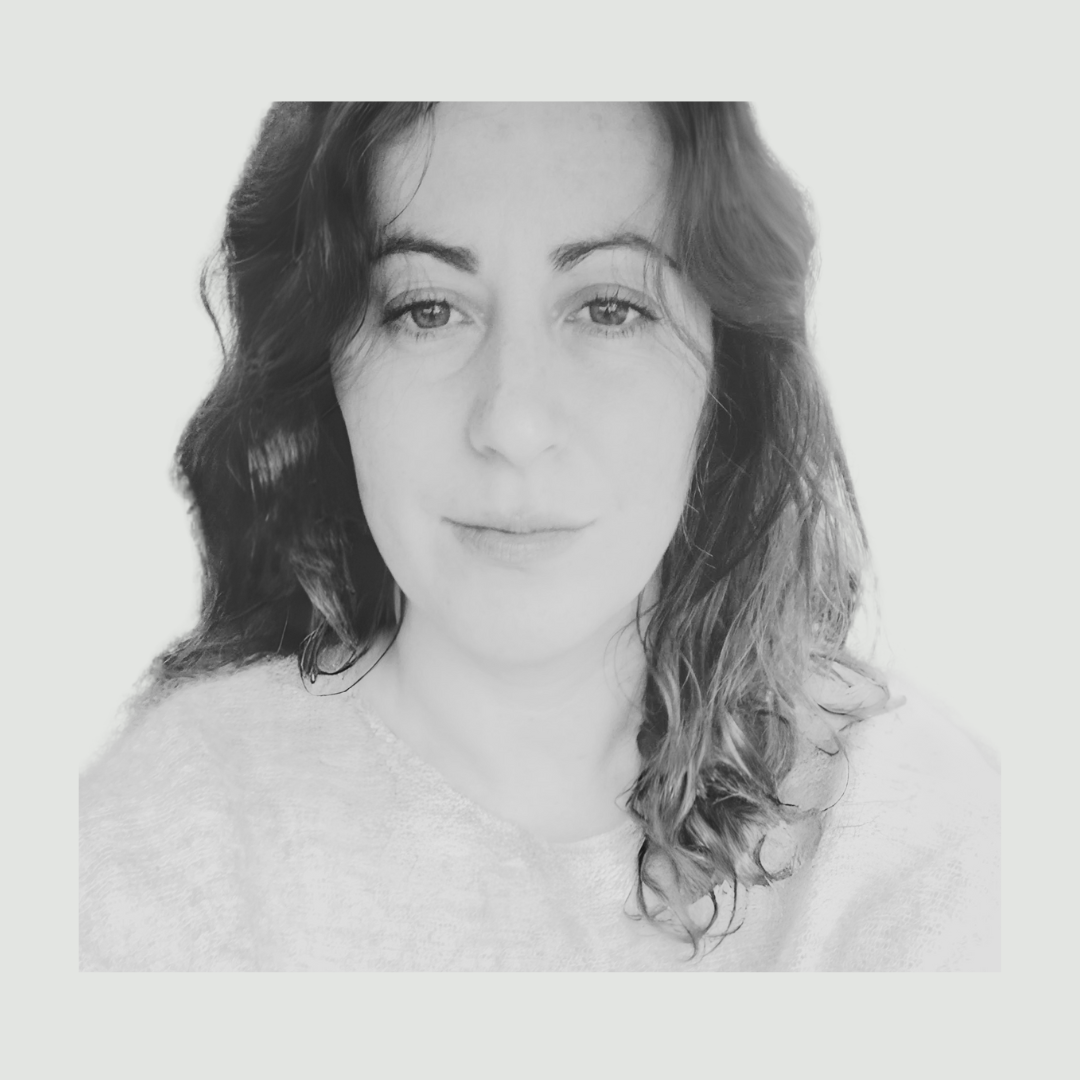

Joseph Havel is an American sculptor born in Minneapolis, who for three decades directed the Glassell School of Art at the Museum of Fine Arts, Houston. His work begins with the most ordinary objects of his daily life — shirts, bedsheets, books, cardboard boxes — which he casts in bronze or resin, letting them slip into new meanings while remaining what they are. He now lives and works between Houston, Paris and Ménerbes, in the Luberon. "Parrot Apartment 3", a large bronze made in collaboration with Hannah, his African grey parrot, has just returned to his Paris studio after a year at the National Museum of Contemporary Art in Athens (EMST), in the exhibition "Why Look at Animals? A Case for the Rights of Non-Human Lives". He tells us about the creation of this work.
"This piece came back to Paris just last week. There were four sculptures in the exhibition in Athens, which was up for a year, and they all arrived at my studio from the museum in Greece last Tuesday. It is bronze, and it belongs to one of the three active series in my work — the pieces I call Parrot Architecture. I think it is the best of the large ones. There are maybe seven large pieces in the series, and I have never lined them all up, because I have never had them all in the same place at the same time — but this is the one I like the best.
The history of the series is that I have an African grey parrot, Hannah. She is 27 years old, and I have had her since she was a fledgling. In a way, we collaborated on these pieces. There is a whole history behind it: female African greys live in colonies, and they are the primary architects of the spaces those colonies live in. Their instinct is to use their beaks to carve out their living spaces, and it keeps them engaged — it is a fun thing for them. When you give parrots toys, they shred them very quickly. So I started giving her things to tear up, as a kind of engaged play between us. It began around 2017, and it really accelerated during COVID.
I started with wood. One day, after trying different kinds and different sizes, I had given her some balsa wood, and I walked in and she had carved something that looked exactly like a Giacometti. I thought: my God, my bird can make Giacomettis. That is how the whole thing started — it was almost a joke. Then we moved to cardboard boxes, because she preferred the boxes. They have to be boxes of a certain size that she is interested in. She tears them up until she is done, and when she quits, I know she is finished. Then I assemble them, and she is allowed another opportunity to do anything else she wishes. Then most of them are cast in bronze. It is a two-way street: she communicates what she likes to me. I know what size of box she wants, I know how to place them for her to do what she wants to do. And for the first few years she only carved when I was in the room with her, complimenting her. This one was made in 2023 into 2024, in Houston, and then went to Greece in 2025.
A few years ago, a curator friend of mine from the Tate was visiting the studio in Houston — I live above the studio — and he saw the first bronzes and asked: does she know what she is doing? So I went and got her. She came down with me and looked at them very carefully. If she didn't know what she was doing, she would have been frightened of them. Instead she reached over and tapped them with her beak. She knew exactly. She knows she made them.
African greys are extraordinary. Alex, the parrot who worked with the researcher Irene Pepperberg, was the first animal to show that non-humans could think creatively — he knew about 350 words, could do basic math, could recognise colours, could refer to things outside the room, and would teach other birds. Their brain structure is different from ours; their verbalisation comes from a different part of the brain. Hannah speaks some English and knows what words mean. But honestly, she probably knows more about human beings than I know about African greys. She probably understands more of my communication than I understand of hers. There is a way in which they have their own cognition — and that is partly why we were in this exhibition, which was about animal rights, and about the fact that we are so human-centric that we assign animals a lower level, when they actually have their own skill sets, their own ideas.
Of course, the question came up early on: does she get credit? She does — I always let people know that she worked on these pieces. But she doesn't get credit in the way one assumes, because to her, they are not art. I am the one who assigns the quality of art to them; that is a human cultural trait. She is doing them for another reason. And I didn't want to abuse my relationship with her by turning her into some kind of celebrity — like the elephants who paint, or the chimpanzees who paint, where there is a very human assumption in assigning those qualities. I wanted it to stay in this place where she gets credit but is not subsumed by my intentions.
She wasn't my first collaborator from the animal world, actually. Almost thirty years ago, when I was named Texas Artist of the Year, I did a show called Cockroach Poems. I had made collages from a book that is important to me, The Dream Songs — words cut out and re-glued onto parchment in my garage. Because of the glue, the cockroaches came and ate away some of the words in order to eat the glue. So I saved the best ones, the ones the cockroaches had edited, and showed those. They edited, and then I edited their editing.
All of my work comes from my personal life. Every idea is related to something I pull from my ordinary situation and put in a new context, which changes its meaning — and it can still live in both worlds. It is still a normal thing, but it also operates in the new space of art, where there are other implications. It is a book taken from my shelf. It is a shirt from my closet, which becomes a symbol of a shirt, and then a thing that is abstractly not a shirt — but still a shirt. These things both confound and expand what we are looking at.
In Athens, we were on the top floor, which offered a more positive view of the ways people can work with animals. It was interesting: the bottom floor, about the degradation of animals, got the most attention. Everybody wanted to talk about the degradation, and almost nobody wanted to talk about collaboration. I don't know if that is just the moment we are in, but I think it also reflects the human-centric view: degradation others the animals, while collaboration assumes a world in which they have a more equal situation. That is related to the parrot work, in a way — the human-centric view of the world assumes we are an idealised species, rulers of the world, when actually we are just engaged in it. Rather than simply fret about that, how can we acknowledge it and still see ways to think of other futures?
There is a term I have been looking at — metamodernism. After postmodernism, which was so focused on irony and critique, it asks how you can be more positive while still acknowledging that there is a situation to be critical of. My work would clearly fit into that category: a very optimistic view, with a critical eye. I didn't come across the word before I started making these things — I came across it after. It was just natural to me."
Joseph Havel, August 2026


Comments